


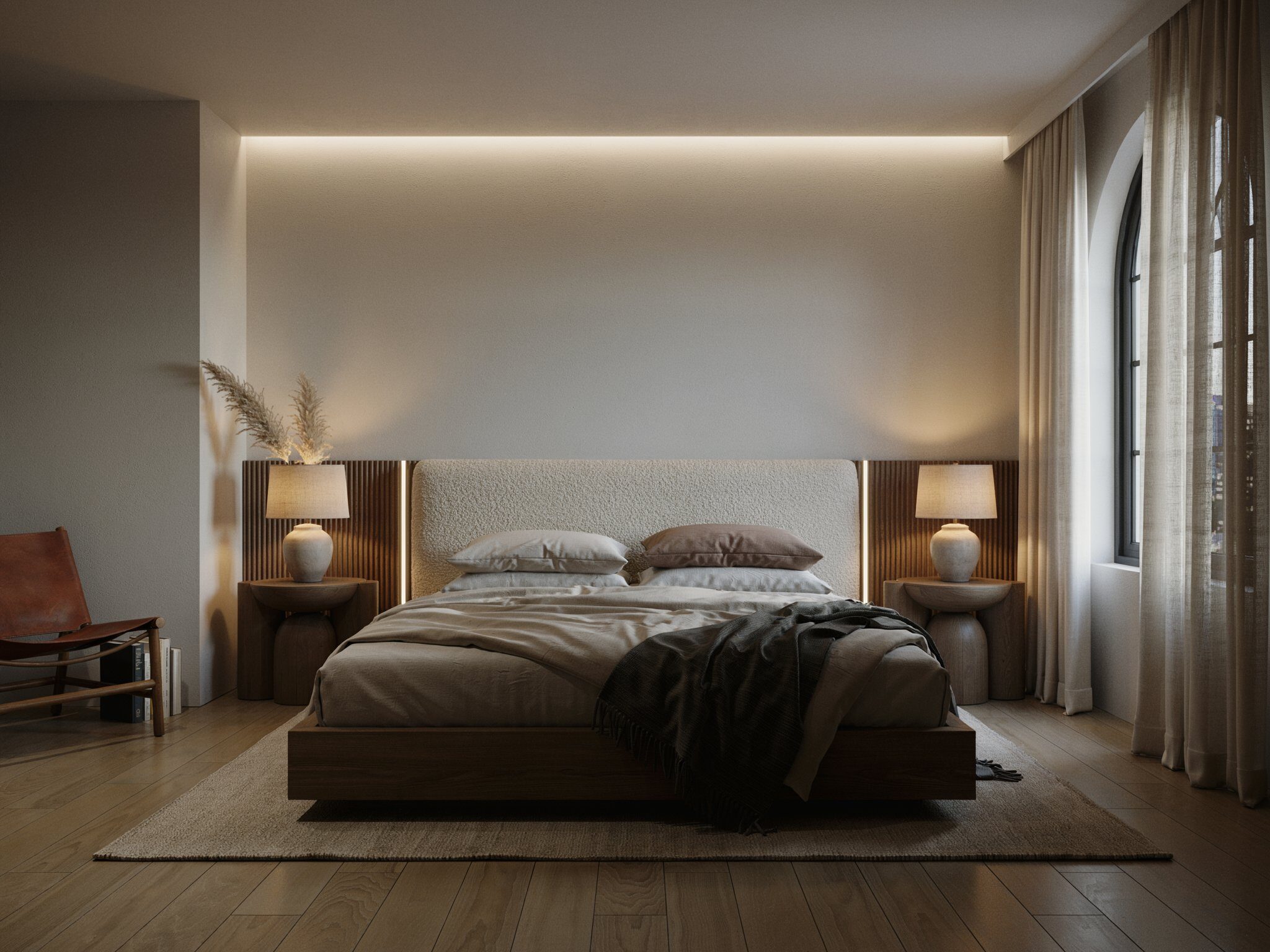


There is something I find very interesting.
Many people arrive home exhausted.
Very exhausted. Mentally overwhelmed. Physically drained.
Carrying the weight of a day filled with decisions, pressure, responsibilities, and constant demands.
They get home… they sleep… but they do not necessarily recover.
And sleeping is not the same as recovering.
Because while you sleep, your body and brain go through different stages of essential internal processes.
And one of the most important ones — which I mentioned in one of my recent episodes — is REM sleep.
REM stands for Rapid Eye Movement.
It is a stage of sleep characterized by high brain activity while the body remains deeply relaxed.
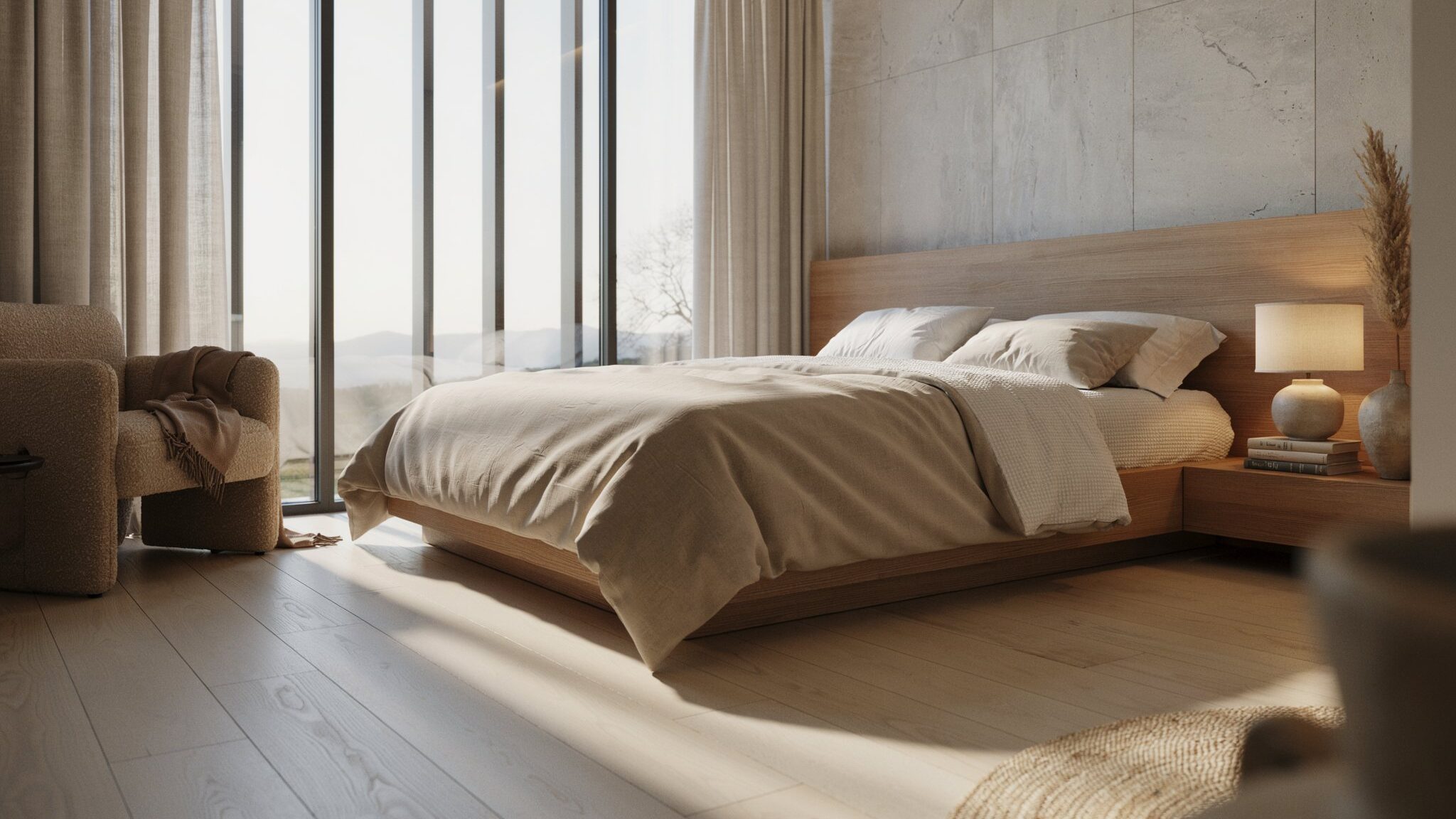
An elegant bedroom environment designed as a private sanctuary for rest, comfort, and renewal.
In fact, you have probably seen someone sleeping and noticed their eyes moving beneath their closed eyelids, as if they were experiencing something very real.
And in a way, they are.
This is the stage when most dreaming occurs.
Although the body is resting, the brain continues performing incredibly important work.
- It processes emotions.
- Organizes information.
- Strengthens memories.
- Integrates learning.
- And helps regulate stress.
Simply put: it is part of the overnight work that helps your brain function better the following day.
And if you are a business owner… if you lead teams… if you make decisions constantly… or if you manage a demanding professional life… this matters deeply.
Because the quality of your recovery directly influences your mental clarity, ability to focus, emotional regulation, resilience to stress, and daily performance.
Even professional athletes protect their recovery time with great discipline.
Not because they have more time to sleep.
But because they understand that recovery is part of performance.
When an athlete is not performing at their expected level, one of the first things analyzed is the quality of their rest.
Because they know they cannot demand peak performance from the body and mind without giving them the opportunity to recover properly.
And the same applies to us.
The real question is not only:
Did you sleep?
The question is:
Did your body actually recover?
Because you can go to bed exhausted… sleep… wake up… and still feel drained.
And millions of people live this way.
- Functioning.
- Producing.
- Meeting expectations.
But silently accumulating a recovery deficit.
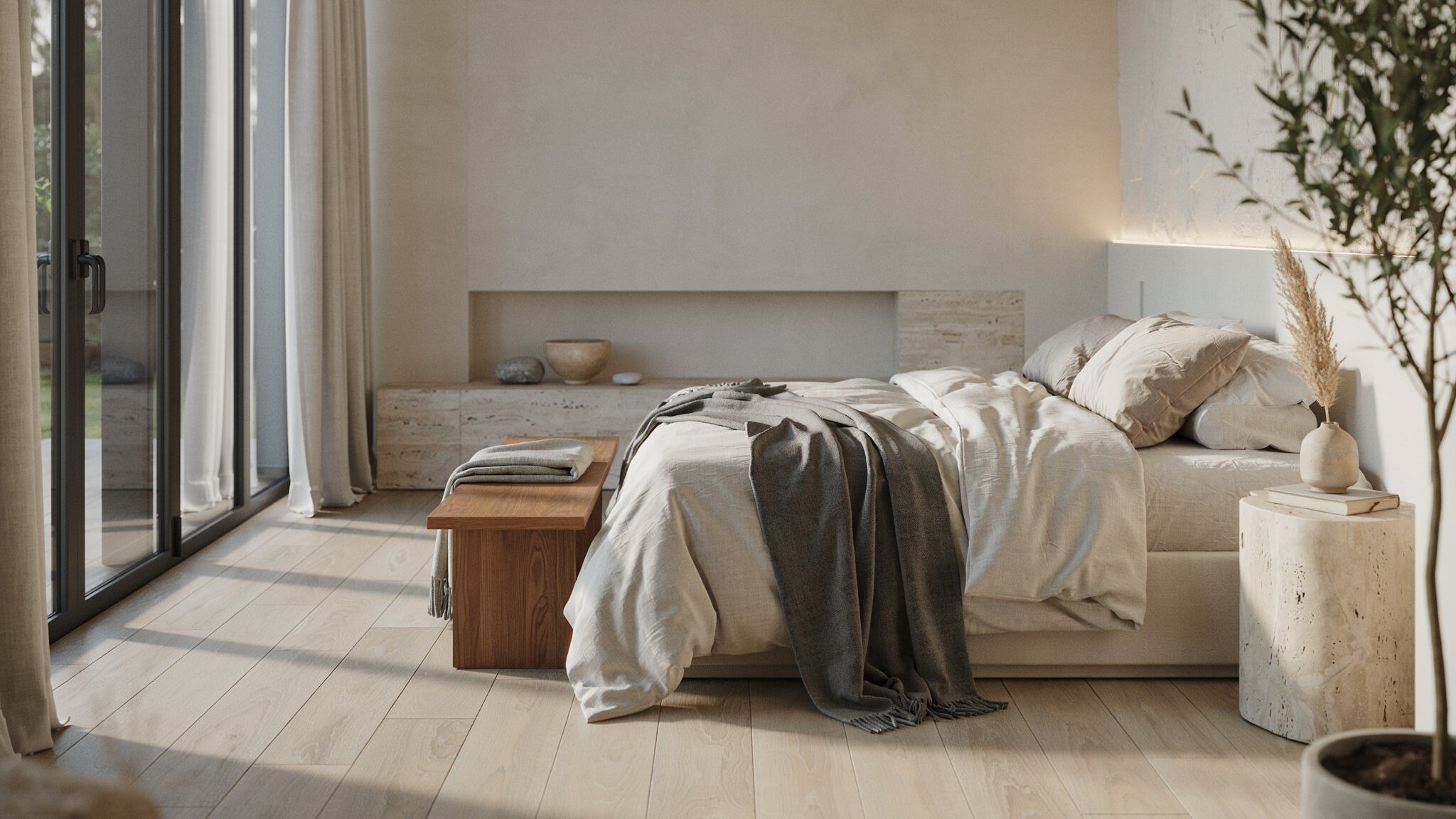
An elegant bedroom environment designed as a private sanctuary for rest, comfort, and renewal.
And this is where the conversation becomes deeply relevant in our design studio.
Because when we work with clients who operate under high levels of demand — business owners, leaders, and people with intense schedules — we place tremendous importance on protecting rest.
A great deal.
Because we understand something:
- The bedroom is not simply another room in the house.
- It is one of the most strategic spaces for human recovery.
And that completely changes the way we approach its design.
Because we are no longer thinking only about creating a beautiful bedroom.
We are thinking about the conditions that allow the body to do what it is biologically designed to do at night.
Recover.
And this is where architecture and interior design work together.
From an architectural perspective, we carefully consider the home’s orientation, bedroom placement, window locations, proportions, and how the space manages natural light.
- How it welcomes the morning.
- How it controls light exposure at night.
- How it supports an environment that respects the body’s natural rhythms.
- We consider environmental comfort.
- Temperature.
- Acoustic control.
And how to create conditions that help the nervous system slow down after an intense day.
Because rest does not begin when you close your eyes.
It begins much earlier.
It begins with the conditions your environment creates to help your body transition into a slower state.
Then, through interior design, we continue supporting that recovery experience.
- Lighting.
- Textures.
- Materials.
- The visual balance of the space.
- The overall experience of the bedroom.

Even the mattress we specify in our projects becomes part of this strategy.
Because to us, it is not simply a piece of furniture.
- It is a recovery tool.
- A technology designed to support the body while you rest.
To support you during the most important hours of the day: the hours when your body restores itself.
Because when you work with high-performing individuals, rest stops being an aesthetic choice.
It becomes a strategic decision.
We do not design bedrooms simply to look peaceful.
We design environments that support higher-quality physical, mental, and cognitive recovery.
Because although no design can “create” REM sleep, it can help create an environment that is more aligned with the conditions the body needs for better rest.
And that matters.
Because modern life has normalized something concerning:
- Living tired and depleted.
- Sleeping without truly recovering.
- Believing that constant exhaustion is simply part of success.
But building an extraordinary life while damaging your ability to recover comes at a cost.
And eventually, your body pays that price.
That is why we talk so much about protecting rest.
Not because we are designing passive spaces.
But because we are creating environments that support demanding lives.
- Spaces designed for people who need to think clearly.
- Make better decisions.
- Recover deeply.
- And wake up with greater capacity to function, create, and lead.
Because true luxury is not only having a remarkable home.
It is also waking up knowing that your body and mind truly had the opportunity to recover.
Now I want to ask you:
Are you just ending the day… or are you truly waking up refreshed?
Is your bedroom supporting your rest… or is it silently working against it?
By Mercedes Quintanilla


Read the Comments +