


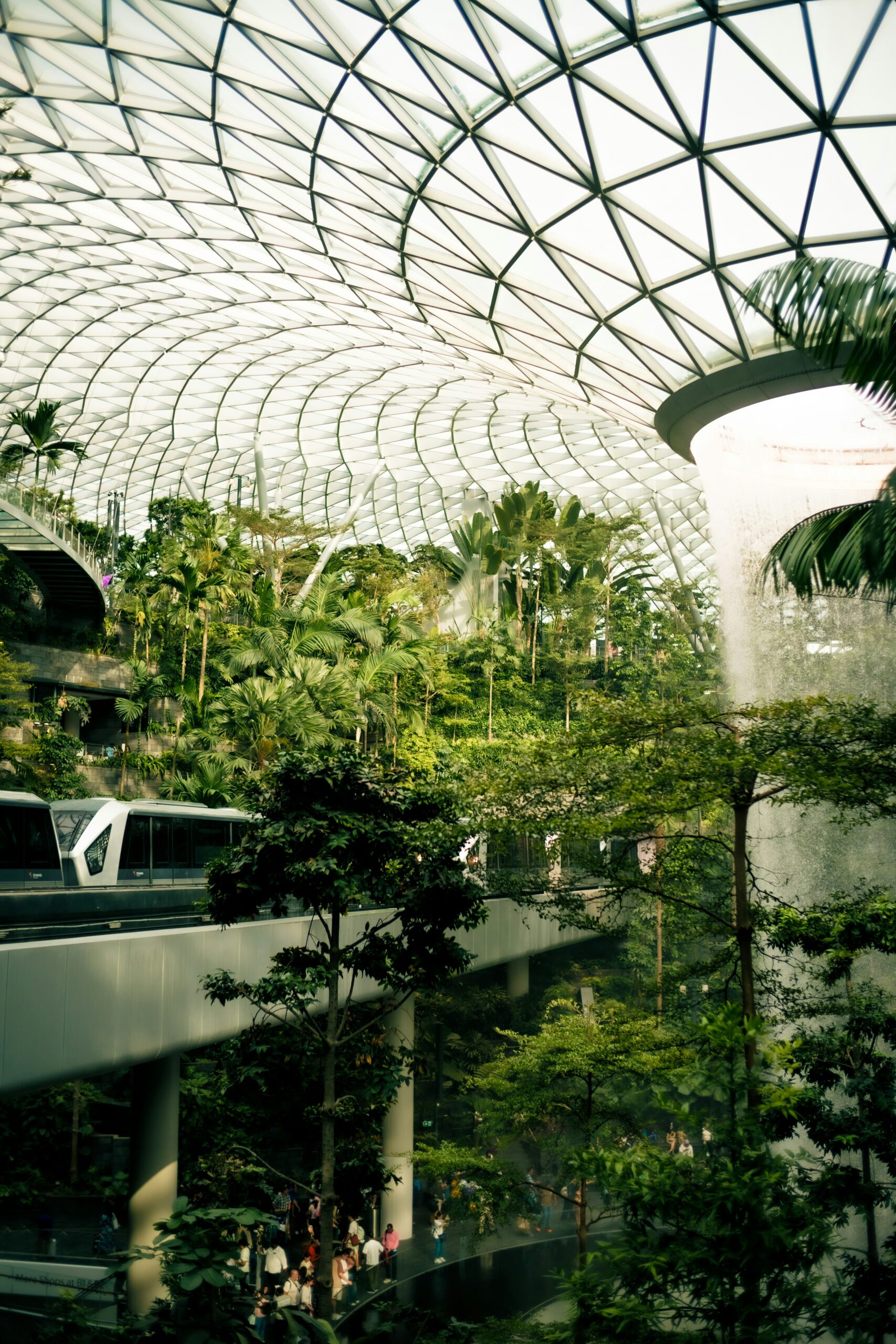


If I could give you a tool that could help you protect your ability to maintain a high level of performance for longer, you would probably think of an app.
A supplement.
A productivity method.
Or perhaps some type of training designed to improve your performance.
But you probably wouldn’t think of something that has been part of human life since the beginning of our history.
And this is exactly what some of the world’s most innovative companies began exploring years ago.
For decades, organizations have invested millions in technology, innovation, and strategies to improve performance.
But high performance does not depend only on the tools we use or the strategies we apply.
It also depends on how our brain functions.
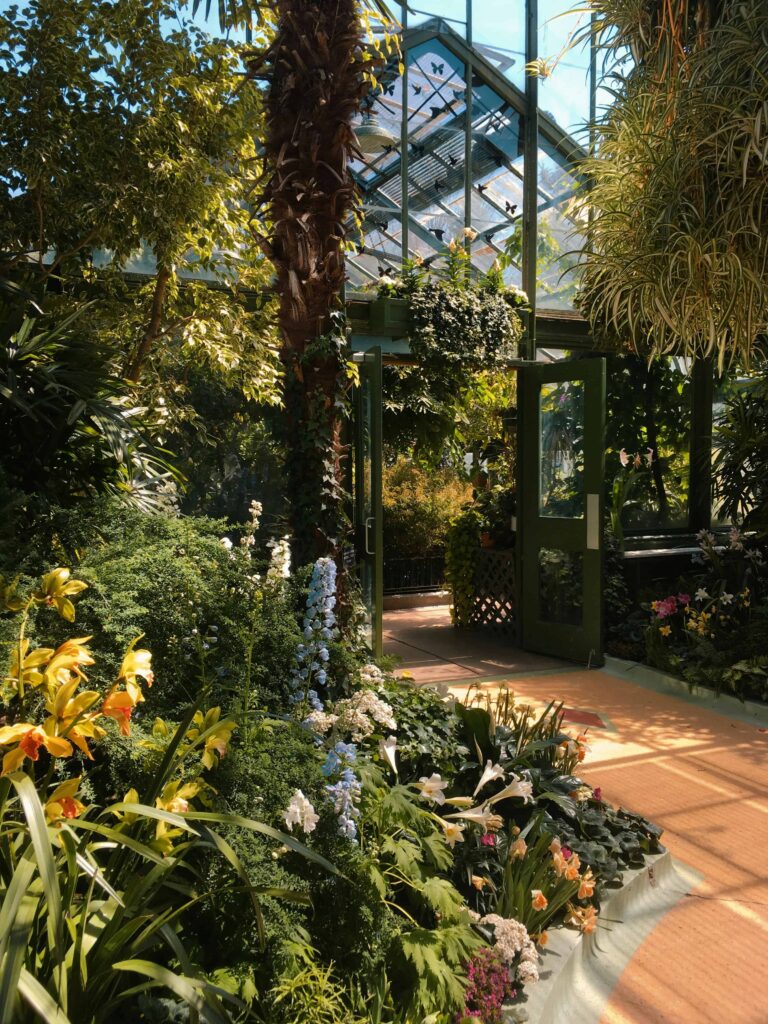
The Science of Biophilia and the Brain
And this is where science takes us to a fascinating concept: biophilia.
The term biophilia was popularized by biologist Edward O. Wilson, who proposed that human beings have an innate connection to nature.
And when we look at human history, this idea makes a lot of sense.
For most of our existence, nature was not somewhere we occasionally visited.
It was our environment.
Natural shapes, colors, textures, and patterns were part of everyday life.
Our brains evolved interpreting that language.
We created extraordinary cities.
We developed increasingly advanced buildings.
We created technology that has transformed the way we live.
But at the same time, we moved farther away from many of the natural elements our bodies evolved alongside.
Beyond Plants: What Biophilic Design Really Means
And this raises a fascinating question:
If our brains naturally respond to certain elements of nature, what happens when we intentionally bring those elements back into the spaces we inhabit?
That is precisely what biophilic design explores.
And I want to clarify something important.
If you search online for biophilic design or biophilic spaces, you will probably find images of spaces filled with plants.
And while vegetation is an important part of this connection, biophilic design goes much deeper.
It is not simply about putting plants in a corner and calling it nature.
It is about understanding which elements of nature can positively influence how we experience a space and how we can integrate them strategically into our environments.
Through:
Organic patterns.
Natural textures.
Authentic materials.
Forms inspired by nature.
Visual connections to the outdoors.
The presence of natural sounds.
Because nature has its own logic.
It has order.
It has rhythm.
It has balance.
And our brains respond to these patterns.
That is why there are spaces where, even if we cannot explain exactly why, we immediately feel something different.
We feel our bodies begin to slow down.
We experience greater clarity.
A stronger sense of connection.
Singapore and the High-Demand Mind
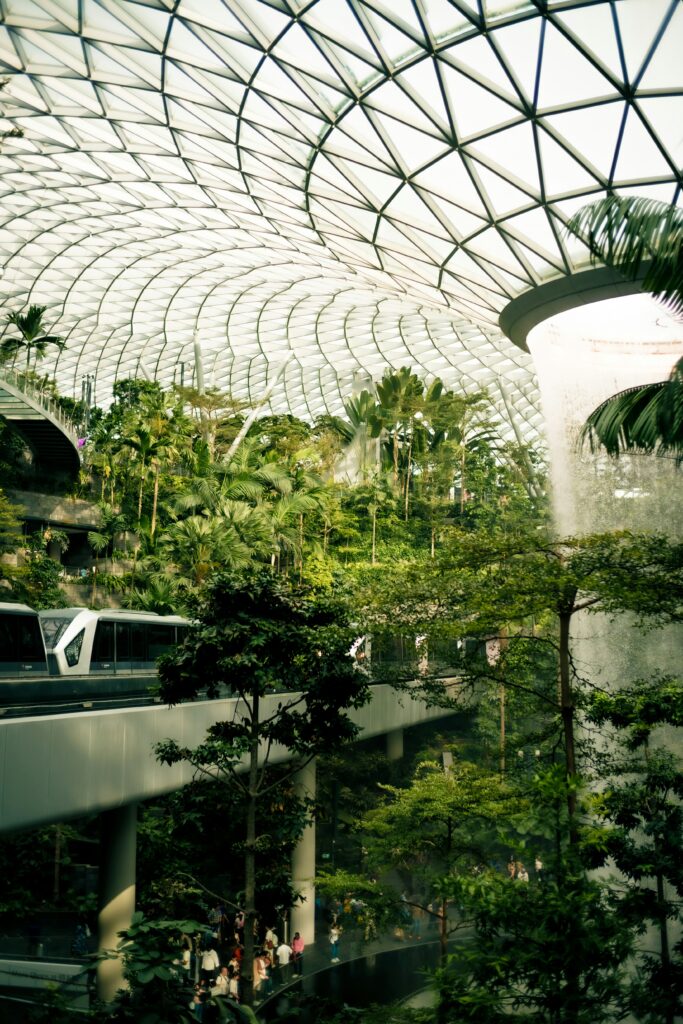
And this is exactly what many organizations have been studying.
Not because nature is simply a decorative element.
But because there is a meaningful relationship between the stimuli we experience every day and how we function.
Cities like Singapore have taken this idea to another level.
For years, Singapore has become a global reference for integrating nature into the places where people live and work.
But what is most interesting is not simply the amount of vegetation they incorporate.
It is the way they understand the relationship between nature and human beings.
The question stopped being: “How do we design more efficient spaces?”
And evolved into: “How do we design spaces that better support human life?”
And this question is especially relevant for people like you.
People who operate under high demands.
People who live fast-paced lives.
People who lead teams, businesses, or important projects.
Because when your mind is one of your most valuable assets, the conditions that influence how that mind functions also matter.
Protecting Your Capacity to Perform
Science has studied how our connection with nature can influence aspects of human performance, including:
Recovery of attention after prolonged periods of concentration.
Stress reduction.
The ability to generate new ideas.
Mental clarity.
And the way we respond emotionally to our surroundings.
And here is the part I find most interesting:
Nature does not necessarily increase your capacity.
It can help protect it.
It can help reduce the factors that limit your ability to maintain a high level of performance.
Maybe you often try to improve your performance by adding more:
More tools.
More systems.
More information.
More productivity.
More training.
But have you ever asked yourself:
What conditions allow your mind to function at its best?
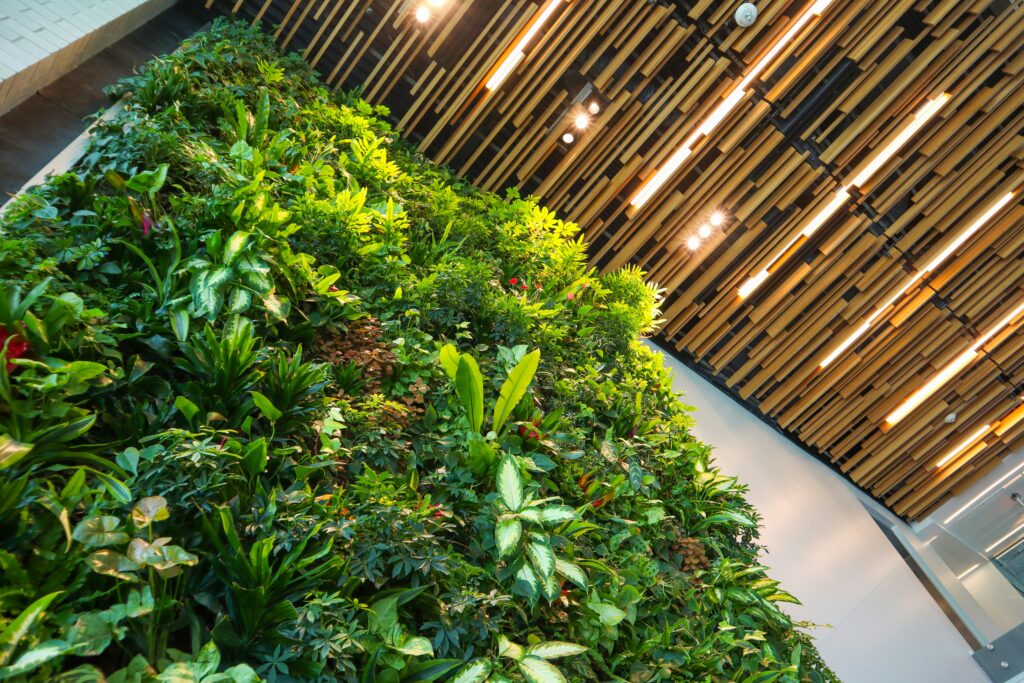
The Intentional Architecture of Your Space
And this is precisely the conversation we explore in our studio.
We do not design nature-inspired spaces simply because they look beautiful or because they are a trend.
We design them with an understanding that nature contains principles that have supported human life for thousands of years.
We combine those principles with behavioral science, ergonomics, and technology to create environments intentionally designed around the human experience.
Spaces where light, materials, proportions, connection to the outdoors, and every individual area have a purpose.
Because the architecture of your space should not only respond to how you want it to look.
It should also consider how you want to feel and how you need to function within it.
The next time you think about improving your performance, don’t only think about a supplement, a new strategy, a new tool, or a new goal.
Because high performance does not depend only on what you eat, what you do, or what you stop doing.
It also depends on applying principles that have supported human life for thousands of years.
Principles that modern life has gradually forgotten, but that science is helping us understand again today.
Perhaps that is the overlooked ally of your performance: your connection to nature.
By Mercedes Quintanilla


Read the Comments +