


By Mercedes Quintanilla
In today’s workplaces, digital connectivity and everyday noise—emails, social media, conversations, phones, equipment, and traffic—can make concentration difficult and fragment our attention.
Considering that a significant share of a company’s operating costs is tied to its people, it is worth examining how office design can support concentration, reduce environmental stressors, and improve the work experience. These decisions also connect to the Triple Bottom Line, a framework that considers an organization’s social, environmental, and financial impact.
Prolonged stress can affect physical and emotional well-being, as well as a person’s ability to concentrate and work effectively. Creating environments that respond to human needs should therefore be part of workplace planning.
How can we design work environments that support awareness and help people stay focused? Biophilic design offers strategies for bringing nature into the workplace and enriching the sensory experience through different senses.
Smell
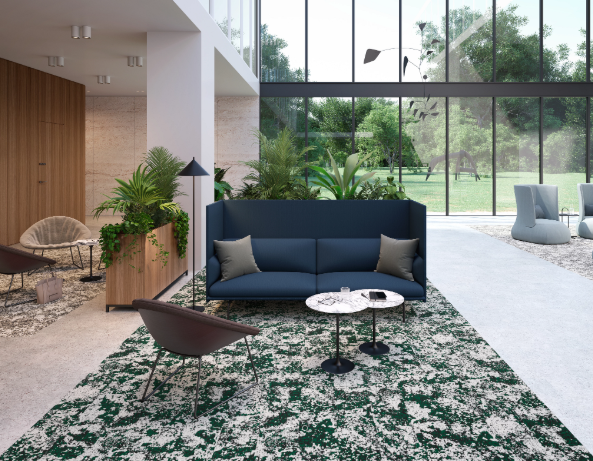
Plants can create a visual and sensory connection to nature. Some plants and flowers also offer subtle scents that enrich the experience of a space. Plant selection should account for maintenance, potential allergies, and environmental conditions. Plants also do not replace proper ventilation or guarantee a significant improvement in indoor air quality on their own.
Sight
Natural light and outdoor views can help create more visually appealing environments and connect occupants with changes in light and the surrounding landscape throughout the day and year.
Touch
Natural textures, such as wood, organic surfaces, and nature-inspired finishes, add sensory variety to a space. Flooring and carpet collections can introduce patterns and textures that enrich the interior experience. Examples referenced in this article include Interface’s Human Nature and Urban Retreat collections, Parcraft’s Perennial and Pressed collections, and Shaw Contract’s Canopy collection.
Touch
Natural textures, such as wood, organic surfaces, and nature-inspired finishes, add sensory variety to a space. Flooring and carpet collections can introduce patterns and textures that enrich the interior experience. Examples referenced in this article include Interface’s Human Nature and Urban Retreat collections, Parcraft’s Perennial and Pressed collections, and Shaw Contract’s Canopy collection.
Hearing
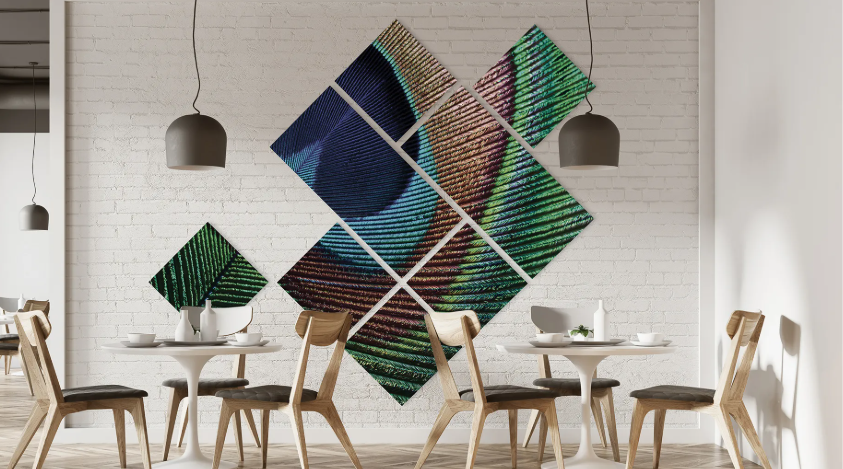
When noise cannot be completely eliminated, acoustic strategies can help reduce distractions. Properly implemented sound masking can make conversations and traffic noise less noticeable. Acoustic panels, including those made from natural materials, can also help manage sound while adding texture to the design. Acusti Art™ Box by Fabric Images is one example of an acoustic solution for interior environments.
Thermoception
Thermoception is our ability to perceive temperature. Air movement and thermal conditions influence how we experience a space. Proper ventilation and accessible temperature controls allow occupants to adjust the environment to their needs. Where feasible, operable windows, ventilation grilles, and well-positioned thermostats can help improve comfort.
Office interiors that are overly uniform, with glossy surfaces and little sensory variety, may feel unstimulating and fail to address the different needs of their users. Thoughtful design considers light, materials, acoustics, temperature, and connection to nature to create spaces that support attention and reduce unnecessary distractions.
Elevate Your Space: The Strategic Blueprint for Exceptional Leaders
I’ve prepared a free resource to help you elevate your space with intention. This blueprint includes strategic recommendations, including how to choose lighting and light bulbs to improve your environment.
Download it for free on our website and start transforming your space.
At MQDS, we combine science, human behavior, and design to create spaces that respond to people and their goals.
Planning a custom residence in Atlanta or El Salvador? Schedule your Discovery Video Call to discuss the feasibility of your project.


Read the Comments +