


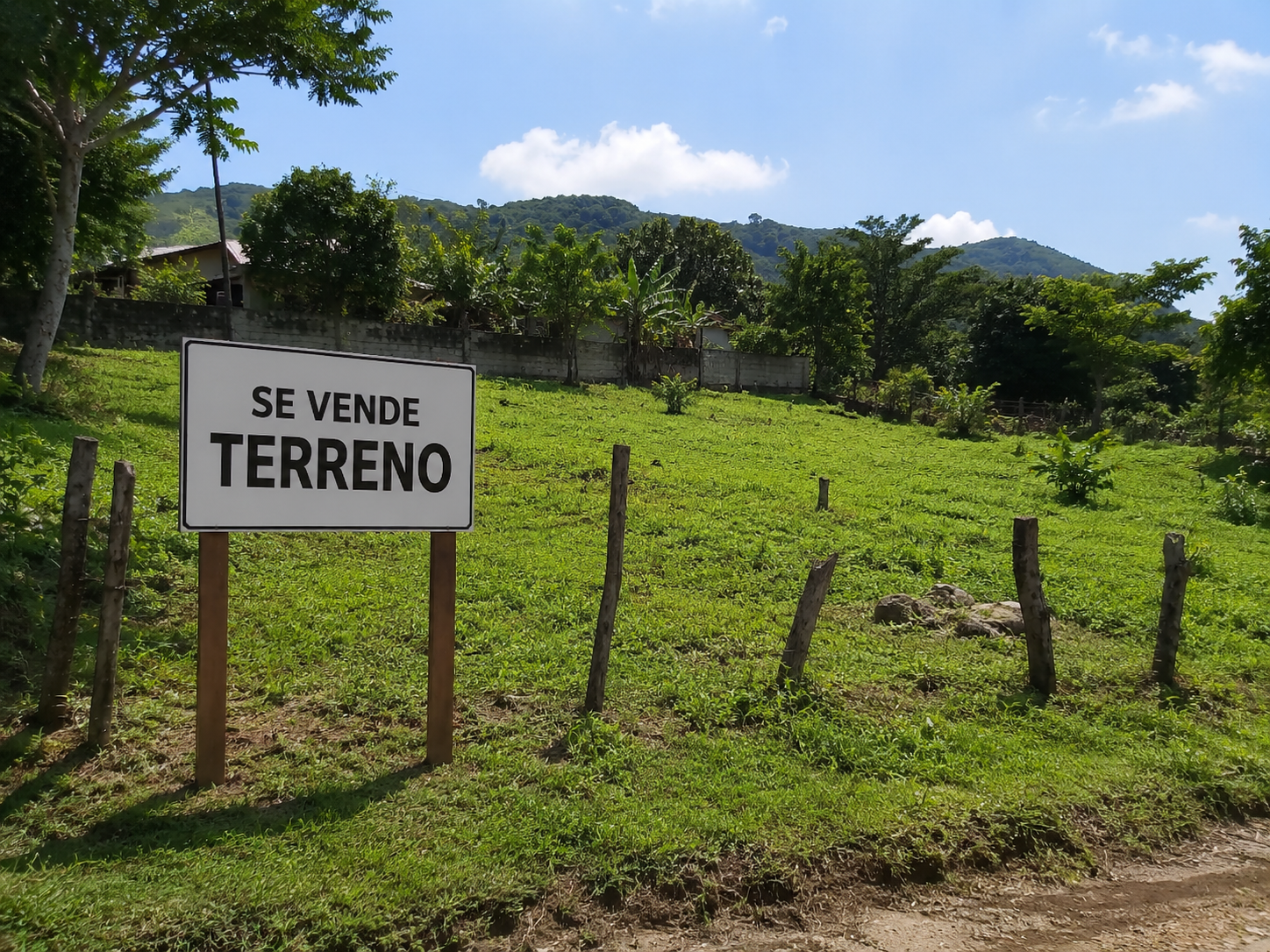


Imagine this.
A property owner drives past a piece of land that has belonged to them for years.
They weren’t looking for anything in particular. They were simply passing by.
Then, suddenly, they saw something they never expected.
There was construction equipment on the property.
Workers were building.
And a company was developing a project… on their land.
The problem?
They had never sold the property.
They had never signed a purchase agreement.
They had never authorized anyone to build there.
That day began a legal battle that could have been avoided.
And although it may sound like something out of a movie…
It isn’t.
Cases like this have happened.
And they remind us of something very important:
When you buy property, it is not enough for someone to tell you they are the owner.
It isn’t even enough for them to show you a deed.
How Does a Real Estate Purchase Actually Begin in El Salvador?
One of the first differences many people living in the United States discover when buying property in El Salvador is that the process can be much more informal.
It is common for negotiations to begin simply by talking with the property owner.
They discuss the price.
They negotiate the terms.
They reach an agreement.
And many times, that agreement is completely verbal.
If you come from a country where everything begins with contracts, deposits, and documents from day one, this may seem unusual.
But in El Salvador, this is a fairly common practice.
And by itself, it does not mean the transaction is illegal or unsafe.
The formal process comes later.
Once the buyer and seller have reached an agreement, the professional responsible for preparing the legal documentation becomes involved.
And this brings up an important question.
How Can You Verify That the Professional Handling the Transaction Is Legally Authorized?
In El Salvador, real estate transactions are formalized by a lawyer and notary public.
Many people use these terms as if they mean the same thing, but legally, there is an important distinction.
A lawyer provides legal advice.
A notary, who is also a lawyer, is authorized by the Supreme Court of Justice of El Salvador to perform notarial functions.
This allows them to prepare and authorize public deeds, certify legal acts, and formally document the transfer of property.
For that reason, before starting a purchase, verify that the professional you are working with is legally authorized to practice as a notary.
This information can be checked through the official records of the Supreme Court of Justice of El Salvador.
It may seem like a small detail.
It isn’t.
There is another important distinction to understand, especially if you live in the United States.
In El Salvador, a notary must be a lawyer. Someone cannot practice as a notary without being a lawyer.
This is different from the United States, where a notary public is not necessarily a lawyer. Their primary role is generally to witness and authenticate signatures and documents.
So, it is important not to assume that the role of a notary works the same way in both countries.
Working with someone who is not legally authorized can create serious problems later.
Is It Enough to Verify Who Is Listed as the Owner?
Once you have the right professional, the legal investigation of the property begins.
The lawyer will normally verify who is listed as the registered owner.
They will also check for mortgages, liens, legal restrictions, or other claims against the property.
That work is essential.
But I always ask one additional question:
What is the registered history of this property?
I don’t only want to know who owns it today.
I want to know who owned it before.
And when those ownership changes occurred.
Why?
Because when a property changes hands several times within a short period, that raises a red flag for me.
It does not automatically mean there is fraud.
But it does mean the property deserves a much deeper investigation.
That is why I always recommend requesting the property’s registration history.
Not just the last few months.
Ask for ten years.
Fifteen years.
Twenty years.
Even twenty-five years, if possible.
The more you understand a property’s history, the better equipped you are to make an informed decision.
What Information Will You Never Find in Public Records?
Now, there is something important that public records will never tell you.
And it may be one of the most useful tools when evaluating a property.
After reviewing the documents, go to the property.
Visit the area.
And don’t go just once.
Visit at different times of day.
Because documents tell you one part of the story.
The community can tell you another.
Don’t walk in asking who owns the property.
Don’t announce that you want to buy it.
Simply take some time to get to know the area.
Walk around.
Observe.
And talk to people.
Salvadorans are generally friendly and welcoming.
If possible, don’t go alone. Consider going with someone you trust who knows the area. This can help build trust and make conversations feel more natural.
Ask simple questions.
How long have you lived here?
Do you know your neighbors?
What is this area like? Is it generally quiet?
Have most of the families lived here for many years?
Little by little, a natural conversation develops.
And when people feel comfortable, they may share valuable information.
You might hear things like:
“Yes, that property was sold a few years ago.”
“The previous owners still come by sometimes.”
“That property has been for sale for a while because there were problems with the paperwork.”
This information does not replace the legal investigation.
It complements it.
What If the Documents Say One Thing… and the Neighbors Say Another?
After speaking with one neighbor, talk to others.
Never rely on a single version of the story.
Look for consistency.
When several people independently tell you the same story, you can often get a much clearer picture of what is actually happening.
But the opposite can happen too.
Imagine the registration history says the property changed owners one year ago.
Yet the neighbors consistently say that the property was never sold and that the same owner has had it for many years.
For me, that discrepancy is enough to pause the transaction until I understand exactly what is happening.
I would rather lose an opportunity to buy a property…
…than spend years trying to resolve a legal problem.
What If You Can’t Travel to El Salvador?
If you live outside El Salvador and cannot do this part yourself, delegate the task to someone you trust completely.
Not just anyone is right for this job.
Look for someone responsible.
Patient.
Observant.
And comfortable talking to people.
The goal is not to investigate like a detective.
It is simply to have conversations.
The best information often comes when people feel like they are having a normal conversation—not when they feel like they are being questioned.
So, How Can You Really Protect Your Investment?
After years of investing, I have come to a very simple conclusion.
The best way to protect an investment is not to rely only on the documents.
It is to build multiple layers of verification.
First, the legal side.
Then, the property’s registration history.
And finally, what you can actually verify on the ground.
When all three tell the same story…
You can move forward with much greater confidence.
Buying property should be a strategic decision.
Not a gamble.
By Mercedes Quintanilla.


Read the Comments +