




By Mercedes Quintanilla.
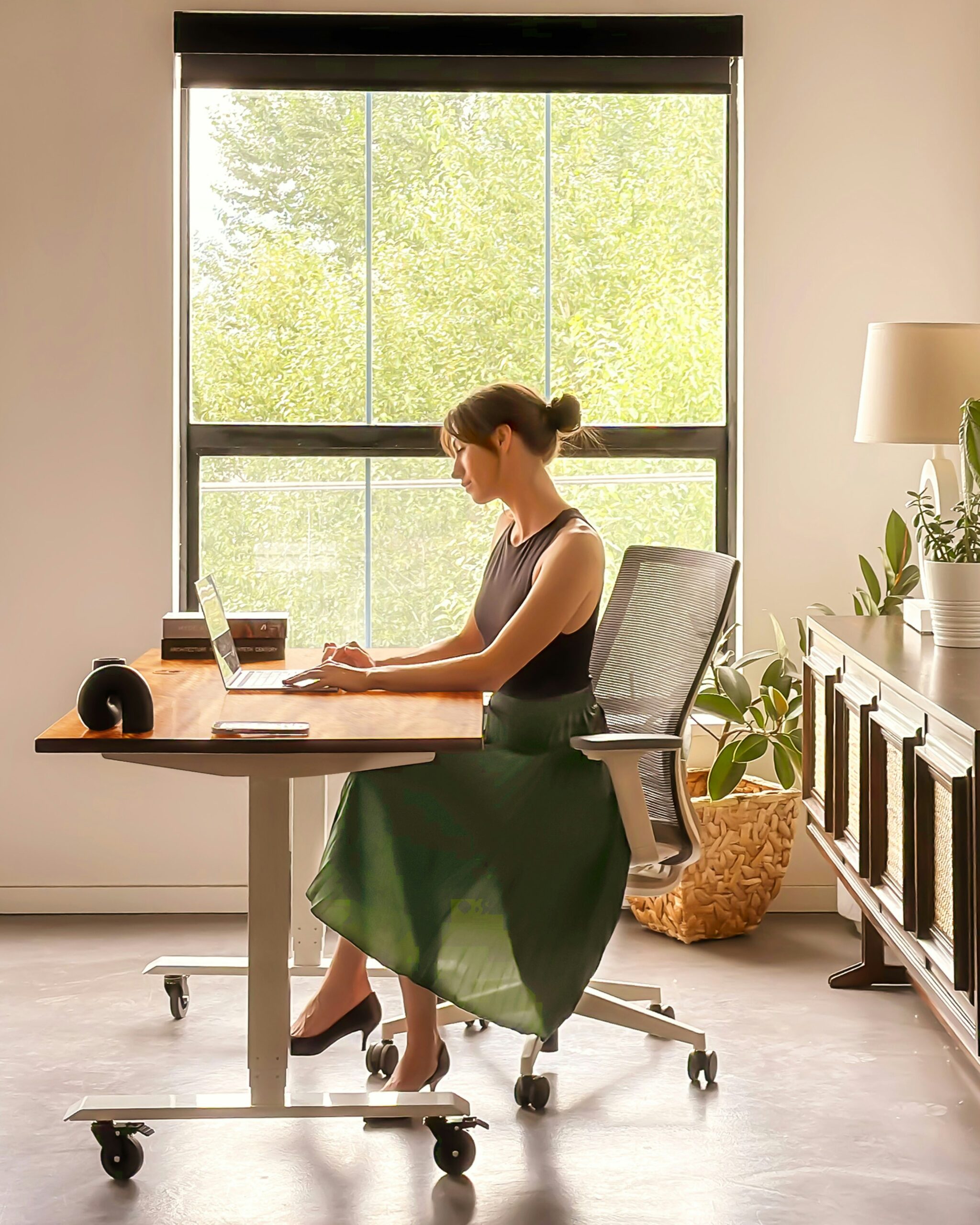
According to the World Health Organization, the built environment accounts for 19 percent of the factors that affect our health and well-being. Lately, “wellness” has taken on a greater meaning for everyone on the planet, and along with the urgency of maintaining good health, the value of reconnecting with nature and having access to daylight is emerging.
One of the most effective strategies in this area of design is to ensure that all spaces have access to light, air and nature through windows, even historically the buildings were illuminated only by the sun, they could not be deeper than the distance at which daylight could enter space.
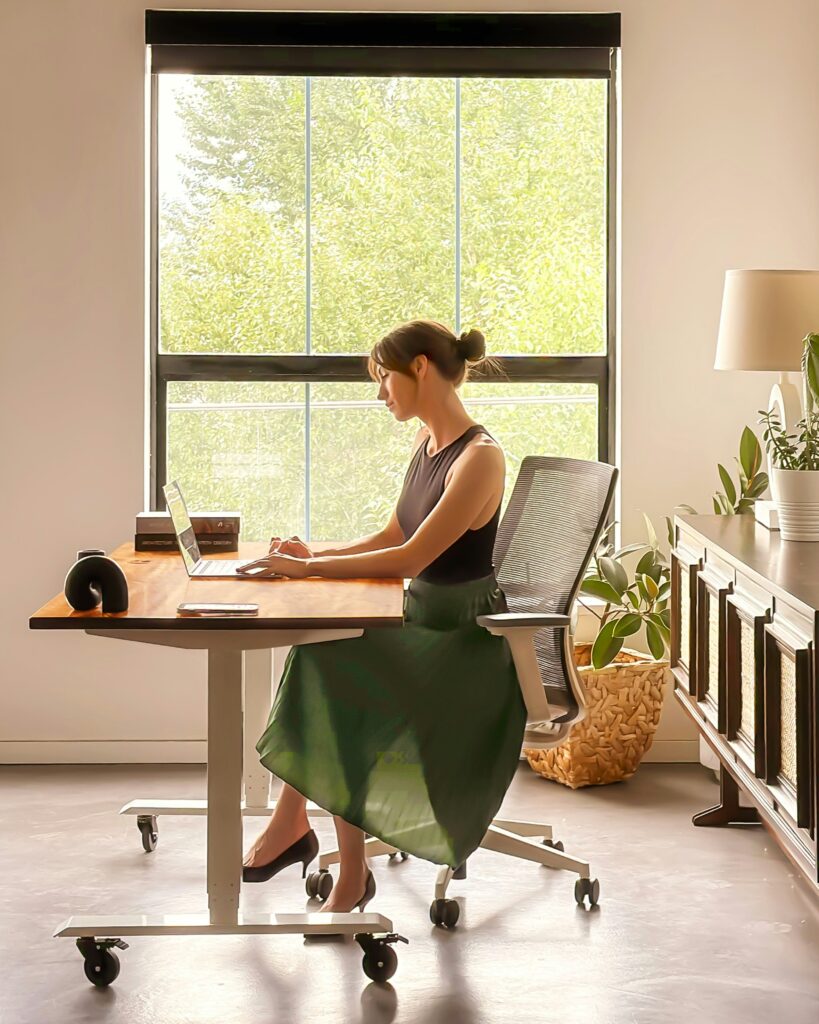
Here are some recommendations:
Natural and artificial lighting.
1. Keep floor plates narrow and ceilings high.
2. A single story building may light from above and may have a deeper floor plate.
3. Whenever possible, orient the long axis of the building within 15 degrees east to west to minimize excessive heat gain and glare that is more difficult to control.
4. Daylight needs smooth, opaque surfaces on which to land, reflect, and illuminate.
5. To guarantee a saving strategy, buildings must have photosensors that control artificial light.
6. Task lighting also gives people more control over their surroundings, increasing occupant satisfaction.
7. Establish metrics for lighting power density and light levels at a given point.
8. Artificial light should be designed to complement natural light.
Thermal comfort.
1. Focus on thermal symmetry to ensure conditions are similar throughout the space.
2. A building of substantial thermal mass is generally more comfortable than a lightweight building because the dense materials equalize possible thermal asymmetry.
3. Radiant systems (the most natural physical principle for transmitting heat and cold), for both heating and cooling, create more comfortable spaces than forced air conditioning systems.
4. Address the six factors of thermal comfort: air temperature, humidity, radiant environment (refers to the reduction in solar radiation gain at the surface depending on location and shaded area), metabolic rate, and movement from air.
Indoor air quality.
1. Intercept pollution that reaches buildings through shoes as it is a source of contamination. A practical way to mitigate this problem is to use a mat at all entrances of the building, but not just any mat, it must be specifically to catch dirt, known in the industry as Walk off mat as Walk-off mat, and all commercial carpet manufacturers have them.
2. Eliminate internal combustion in conditioned spaces as much as possible. Consider using fully electronic devices and equipment as they can be programmed and run automatically. (computer equipment, etc.).
3. Avoid gas emission, choose elements without volatile organic compounds instead of low organic compounds. Pay attention to the components used in the manufacture of construction materials, finishes, furniture, fabrics, plastics, composite materials and others that can emit gases.
Acoustics.
1. Set space by space the maximum background noise.
2. Identify the noisiest spaces and put them in consecutive order.
3. Set objectives of sound transmission type.
4. Limit glazing (use of glass).
5. Use acoustic panels both vertically and horizontally in open spaces.
Ergonomics and Comfort.
Posture has a direct effect on productivity levels, this is because most of the time employees are stooped or holding a bad posture, among the most common health issues that employees present are the following:
1. Deformities in the neck and spine.
2. Joint and tendon problems.
3. Fatigue and visual disturbances.
4. Circulatory disorders.
5. Decreased performance.
To avoid this health issues, the following recommendations must be taken into account:
- The work environment.
It must meet the necessary dimensions and be flexible enough for the employees, it must facilitate movements and changes in posture, so that the user has alternatives in times of fatigue.
- The chair and work table.
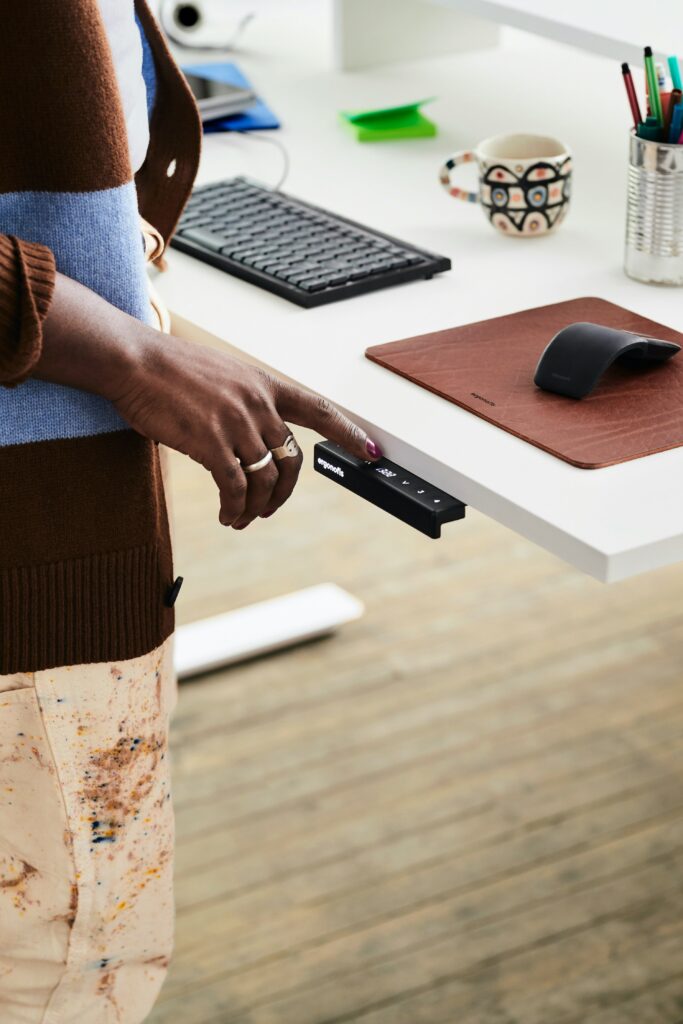
These elements must be designed with mechanisms that allow change of posture. Height-adjustable desks, for example, give users the flexibility to sit or stand at their workspace, allowing the body to rest without interrupting productivity.
Among the benefits of an adjustable table we have:
-Posture: Proper work surface height while sitting or standing promotes good posture and prevents back pain.
-Productivity: Many people find that the ability to alternate between sitting and standing helps them stay focused and energized throughout the day.
-Health: Studies have shown that spending a few hours a day on your feet helps maintain and improve health, and eliminates some of the health risks associated with sedentary habits.
The dimensions of the work tables are important, they must favor visual comfort and allow the screens to be placed at a distance of 65-70 cm or 26 in. with respect to the eye and finally the materials must be pleasant to the touch.
When choosing the chairs we must take into account that it must be adjustable in height and depth, the seat must be reclining, they must help the body to maintain a correct posture and the materials must favor perspiration, they must be antistatic and have appropriate wheels. to the floor where it will be used.
- The use of work accessories.
There is a wide variety of accessories that help improve posture, among these we have arms for monitors they allow you to adjust their height and distance, so that it adapts properly to the user’s height, and in turn frees up the work table. . Also, a mouse that eliminates hand contact with the desk and allows for better posture for the wrists is recommended.
It is worth mentioning that an ergonomic mouse in a bad location will not perform its function no matter how ergonomic it is, that is why it is important to add a keyboard system to the work table. In many ways, a keyboard stand is the heart of the ergonomic workstation. A keyboard tray allows the user to sit in a healthy, neutral posture by bringing the keyboard and mouse to the user in an ergonomic position.
A well-designed keyboard tray offers protection against carpal tunnel syndrome, neck and back pain, and other musculoskeletal problems, thereby helping the user to maximize their productivity in a workday.
There are many other elements and components to consider when designing workspaces, and although these points mentioned here are basic, they are also key, not only does it provides a suitable workplace, but it also improves engagement, the well-being and productivity of employees so that they feel happier and more fulfilled and therefore successful, which benefit companies, because who does not want this type of employee?
References.
• Design for Well-being. (s.f.). AIA. Retrieved August 26, 2021, from https://www.aia.org/showcases/6082617-design-for-well-being:31
• O’Gara, M. (2019, September 2). Thoughtful Design Methods to Foster the Wellness-Minded Workplace. Work Design Magazine. https://www.workdesign.com/2019/05/well-building-design-methods-foster-wellness-minded-workplace/
• Cottrell, A. (2021, March 25). Biophilic design is 2021’s most exciting new interior trend – how to use it in your home. homesandgardens.com. https://www.homesandgardens.com/news/biophilic-design
• https://www.humanscale.com/userfiles/images/sit_stand/quickstand_eco/ecoworkstation_6_3000.jpg
• Home – ESI. (s.f.). ESI. Retrieved October 1, 2021, from https://www.esiergo.com/
• Humanscale | Ergonomic Office Furniture Solutions. (s.f.). Humanscale. Retrieved October 1, 2021, from https://www.humanscale.com/
• Home. (2021, October 4). Logiflex. https://logiflex.ca/en-us/

Read the Comments +