


There is a question almost no one asks — yet it has more impact on your life, and on your results, than you might imagine.
It is not an aesthetic question.
It is not a style question.
It is not even a design question in the traditional sense.
It is a question that directly affects how you function:
Is your space an asset… or a liability?
Most people think about assets and liabilities when they talk about money.
Investments.
Properties.
Businesses.
Financial strategies.
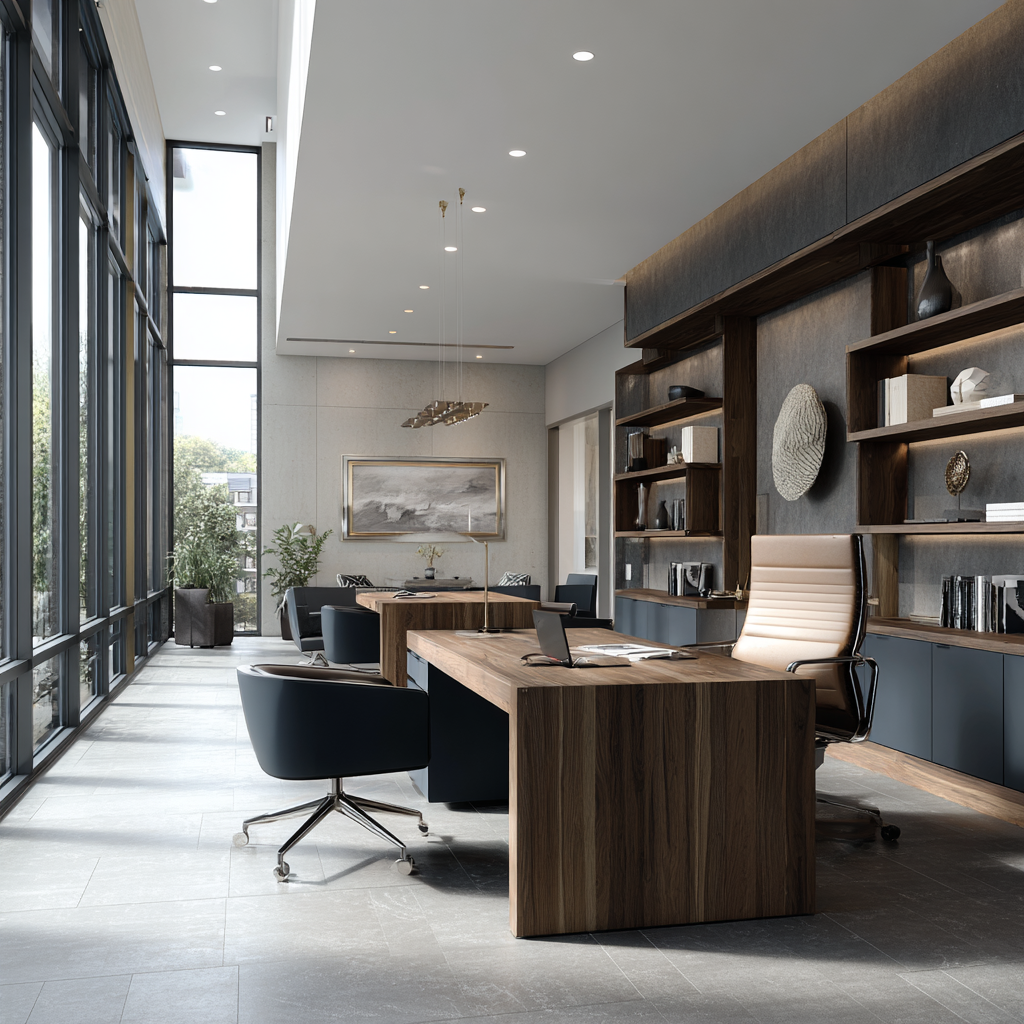
But very rarely do we apply that same logic to the spaces where we live and work every day.
And yet — precisely there — a significant portion of our energy, health, clarity, and performance is at stake.
Because a space is not just where things happen.
It is the system that conditions how they happen.
Even if you don’t consciously notice it, your environment is constantly influencing how you operate.
How you move.
How you think.
How you make decisions.
How much effort it takes to sustain your day.
And over time, that influence either adds up… or subtracts.
An asset adds.
A liability drains.
The real question is:
what is your space doing to you?
For decades, the conversation around architecture and design has focused on important things — but incomplete ones.
Functionality.
Aesthetics.
Efficiency.
Codes and regulations.
Trends.
All of that matters.
But something essential was left out for a very long time:
the real human experience inside the space.
Not the idealized experience.
Not the render.
Not how it “should” feel.
The everyday experience.
The one the body lives.
The one the mind processes.
The one the nervous system carries.
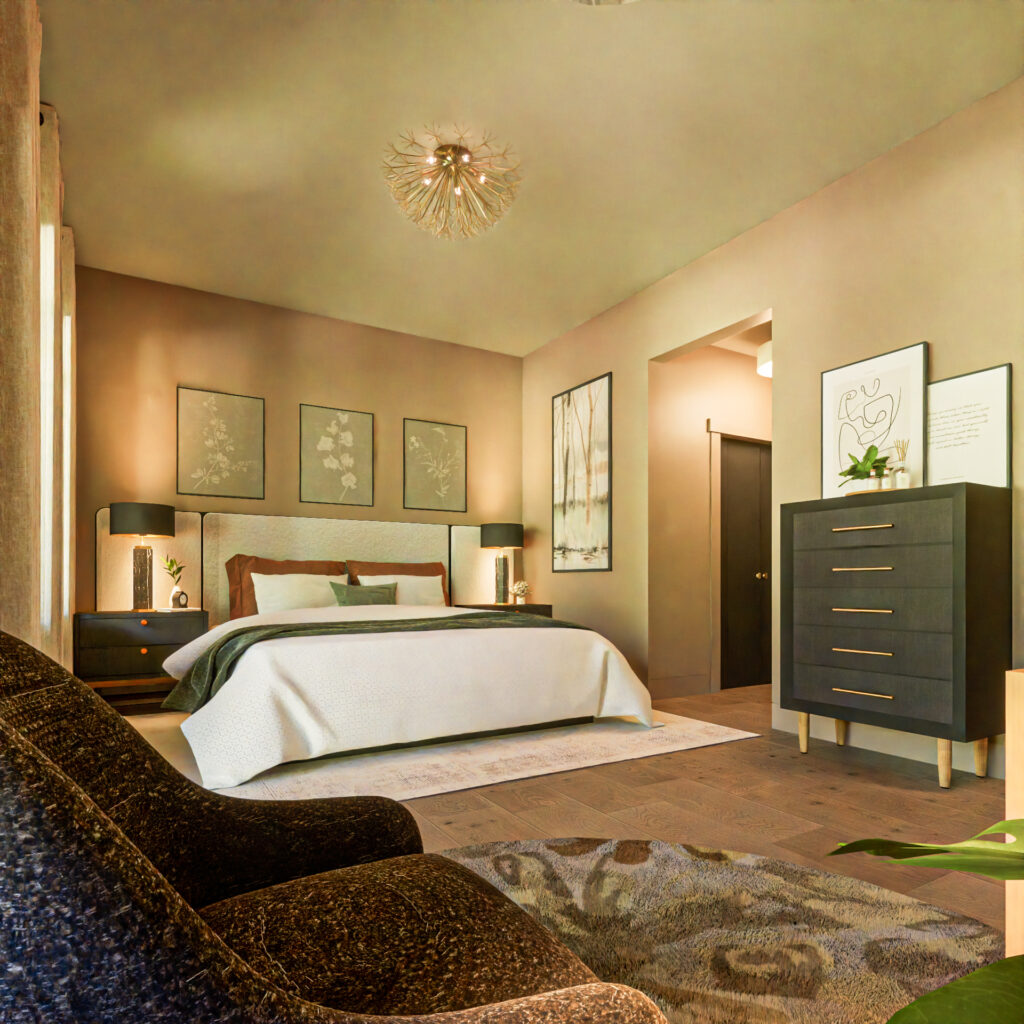
Many spaces were designed to look good and function well…
but not necessarily to support the person inhabiting them.
And when a space does not support, it begins to demand.
It demands attention.
It demands adaptation.
It demands constant effort.
Not dramatically.
Not obviously.
Silently.
Let’s look at this from a strategic angle.
When a space is not aligned with how you actually live and work, you start paying costs that rarely appear in an initial budget or balance sheet.
Costs that don’t show up in Excel.
Costs that aren’t in the contract.
Costs that were never anticipated.
But they are felt.
More fatigue than normal.
More difficulty concentrating.
More irritability.
Less mental clarity.
Less capacity to recover.
And when that wear continues over time, the body sends the invoice.
In the form of chronic stress.
Sleep issues.
Physical tension.
Medical visits.
Treatments.
Lost time.
Decisions made from exhaustion.
Being unwell costs money.
Being depleted costs money.
Operating below your true capacity costs money.
Even if you have health insurance.
Even if you have resources.
Even if you’re “used to handling everything.”
That is when a space stops being neutral
and becomes a liability.
A liability is not something “bad.” It is something that does not give back what it demands.
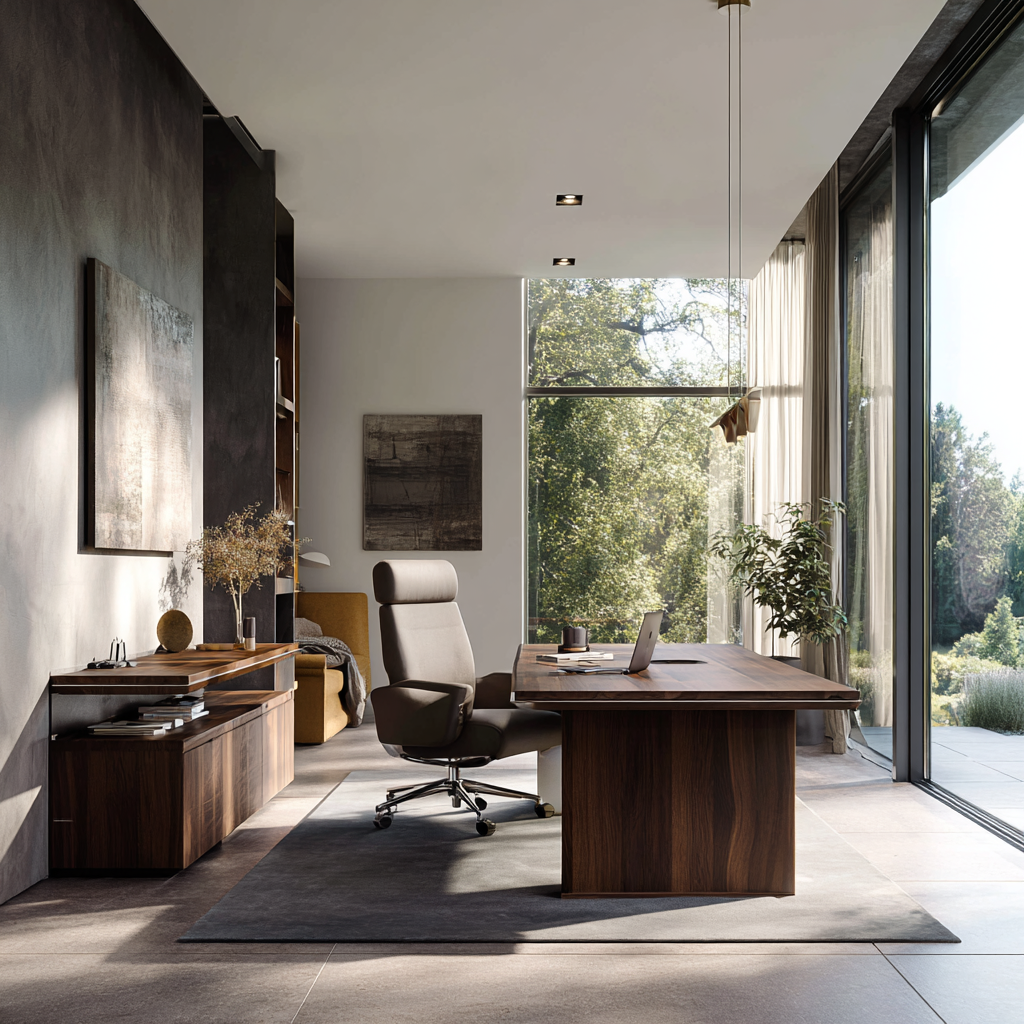
A passive space asks for more energy than it returns.
More focus than it supports.
More willpower than it accompanies.
And the most complex part is that many of these spaces are — on the surface —
architecturally correct.
Well executed.
Visually attractive.
But they are not designed for the real human experience of the person living or working there.
Not for their rhythm.
Not for their level of demand.
Not for their mental load.
Not for how they lead, create, decide, or rest.
Now let’s compare that with an asset.
An asset is not something that costs nothing.
It is something that gives back.
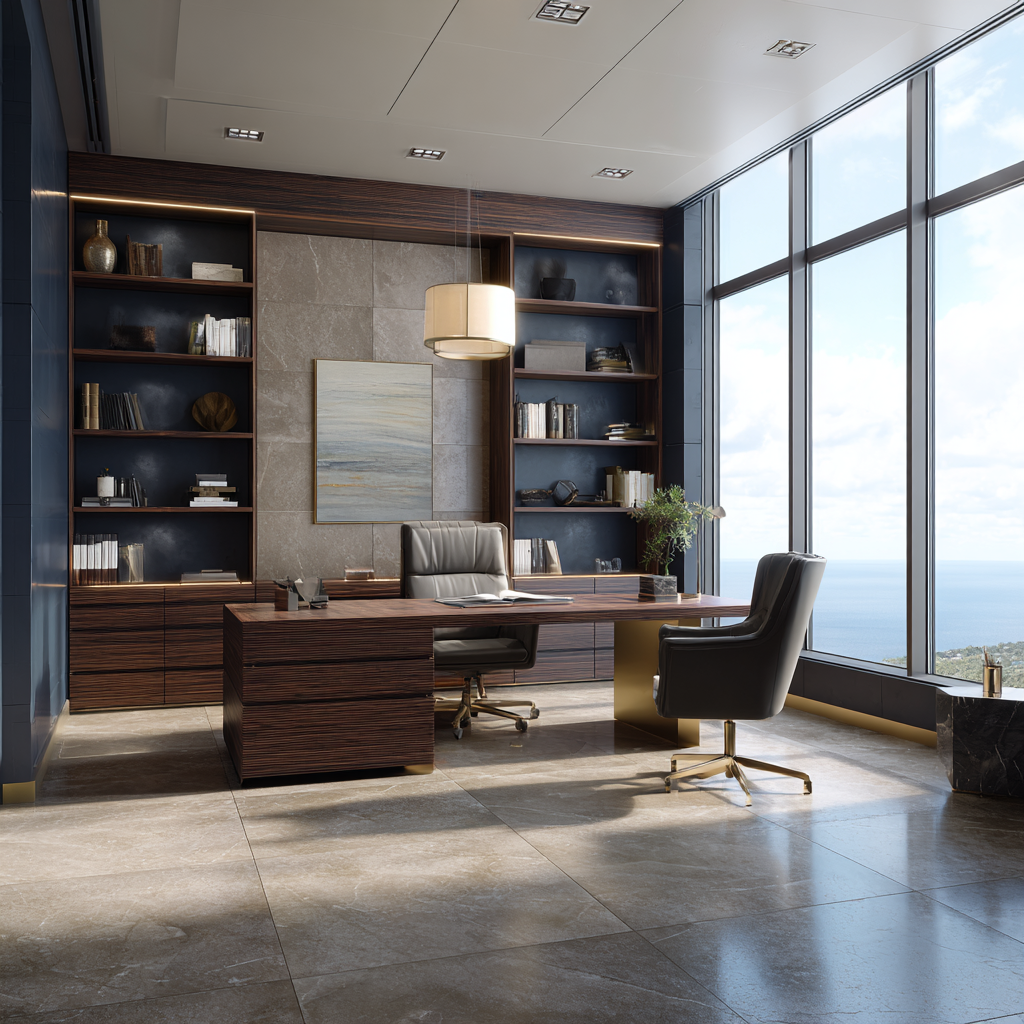
An active space is one that:
- reduces friction
- sustains energy
- facilitates focus
- allows recovery
- supports different states throughout the day
It doesn’t eliminate effort — it makes it sustainable.
It doesn’t promise perfection — it offers support.
And when a space functions this way, the impact goes far beyond “feeling good.”
It affects how you lead.
How you respond under pressure.
How you make complex decisions.
How you use your time and attention.
That is also performance.
That is also results.
This is where I want to introduce a shift in perspective.
Not as a technical definition.
Not as a label.
But as a different way of thinking about space.
For a long time, the starting point of design was this:
How does the space look?
Then came:
How does it function?
But there is one question that changes everything when it becomes the starting point:
How does the person need to feel here in order to live and perform better?

When that question leads the process, every design decision changes.
Because the space is no longer designed only to fulfill functions,
but to regulate experience.
What I call experiential spaces.
And that requires considering things that were previously ignored or minimized:
- the relationship between activity and pause
- the cognitive load of the environment
- how the space contains or exposes
- transitions between states: focus, rest, interaction, silence
- how architecture guides the body
- how interior design communicates calm, tension, or clarity
This is not decoration.
These are spaces working with — not against — human biology.
From this perspective emerges Restorative Design.
Restorative Design is not a style.
It is not an aesthetic.
It is not a “wellness” trend.
It is an approach.
An approach that understands that space does not merely host activities —
it actively participates in how we experience them.
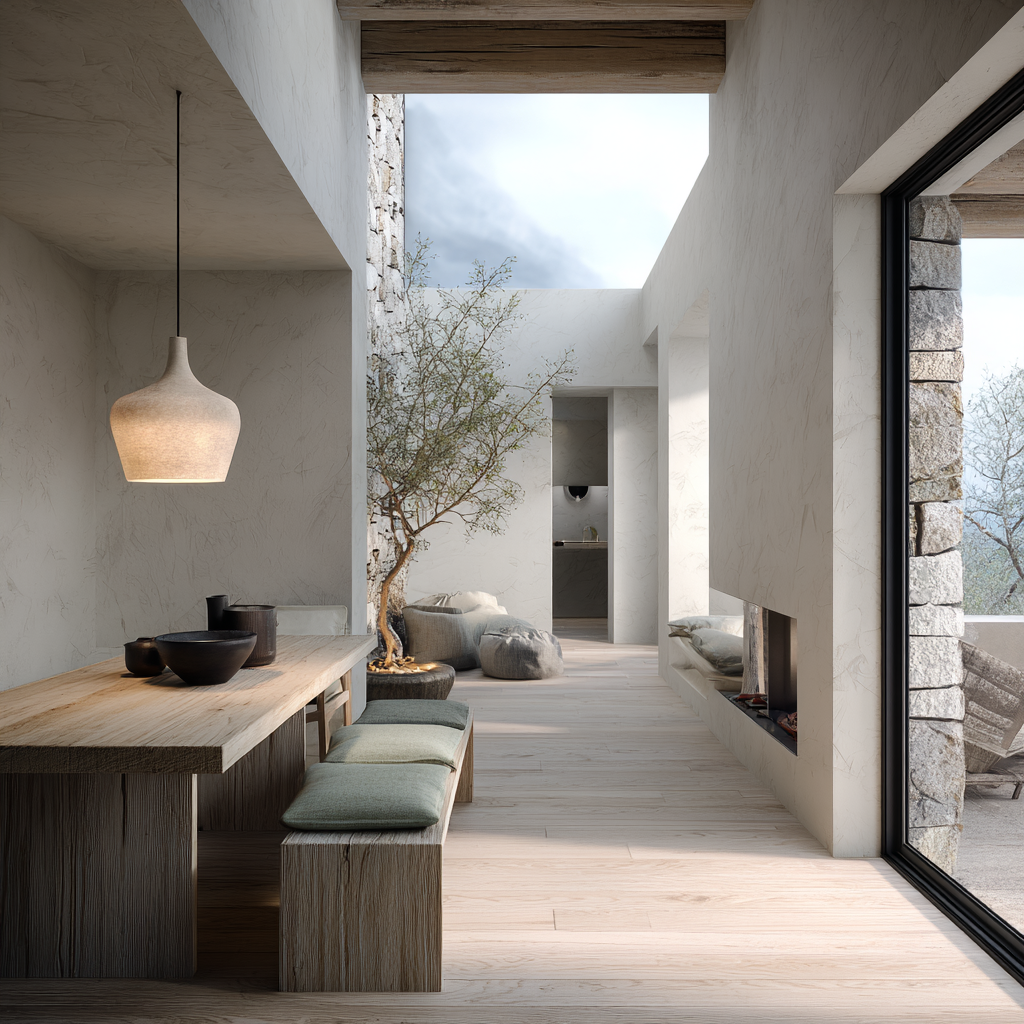
From this framework, space stops being a passive backdrop
and becomes a silent partner.
A partner that can:
- help you recover energy
- reduce accumulated wear
- sustain mental clarity
- support more conscious decision-making
- protect long-term well-being
When architecture and interiors are designed this way, the space stops draining.
It starts adding.
It becomes a high-performance environment.
And there is something important I want to underline:
This is not only for “calm” spaces.
Not for retreat homes.
Not for slow lifestyles.
This is especially critical for people carrying high levels of responsibility.
Leaders.
Executives.
High-performing professionals.
Visionaries.
People who make decisions constantly.
Who manage pressure.
Who hold teams.
Who operate in complex environments.
The more demanding your life is,
the more strategic your environment becomes.
Because you cannot have a high-performance life
inside a low-performance space.
A poorly aligned space amplifies wear.
A well-designed one can absorb it.
And that difference, sustained over time, is enormous.
That is why thinking of your space as an asset is not a luxury.
It is a strategic decision.
It is understanding that not everything is measured in square footage,
or finishes,
or budgets.
Some of the most important investments are not immediately visible —
but they are felt every single day.
In your energy.
In your focus.
In your well-being.
In your ability to sustain what you have built.
A space that does not care for your human experience
is not neutral.
It is a liability.
And a very expensive one.
My work, as a designer, is not only to create spaces that look good.
It is to design environments that understand the person inhabiting them.
Spaces that do not require you to function against yourself.
Spaces that do not demand constant compensation.
Spaces that do not charge you in wear what they appear to give in aesthetics.
Spaces that work with you.
Because when your environment becomes your ally,
the way you live changes.
The way you work changes.
And your results change as well.
If this question begins to stay with you —
if you start looking at your spaces through a different lens —
it is not a coincidence.
It is the beginning of a deeper conversation with your body.
See you in the next blog.
By Mercedes Quintanilla

Read the Comments +