


Today I want to start with something very few leaders are willing to admit.
Most leaders invest heavily in their teams…
but very little in the environment where those teams are expected to perform every day.
They invest in talent.
In salaries.
In bonuses.
In coaching.
In organizational culture.
In benefits.
But the space…
the space usually comes last.
Not because it doesn’t matter.
But because as long as it “works,” it’s assumed to be enough.
Today, I want to challenge that idea.
Because the real question isn’t whether your team is capable.
The real question is: how much damage is the environment causing to your team’s productivity?
Your team is your most important asset.
We all know that.
It doesn’t matter if you run a family business, a startup, or a global corporation.
Without a team, there is no business.
Without a team, there is no growth.
Without a team, there is no execution.
A leader can walk alone.
But they cannot run without a team that supports them.
And yet, that asset—the most valuable one—is often placed in spaces that are not prepared for the level of demand we place on them.
Think about it for a moment.
We ask teams to:
– think clearly
– collaborate
– solve complex problems
– make fast decisions
– stay focused
– perform under pressure
But we sit them in environments that:
– drain energy
– fragment attention
– create constant noise
– prevent deep focus
– offer no real places to pause or recharge
That is not neutral.
That directly affects performance.
Here’s an uncomfortable truth:
Productivity doesn’t live only in the person.
It lives in the relationship between the person and their environment.
The environment can energize or exhaust.
Invite or block.
Motivate or discourage.
Support—or demand too much.
And when a space demands more than it gives back, the cost doesn’t show up right away…
but it accumulates.
Brilliant teams start to look tired.
Talented people lose focus.
Creativity drops.
Mistakes increase.
Turnover begins.
Not because the team is weak or incompetent.
But because the environment isn’t doing its part.
How do I know this? Because I’ve been there.
I was an employee. I worked in environments that left a lot to be desired—spaces that made you want to run out the door every single day.
Later, while developing workplace projects, I walked through countless offices, buildings, and organizations.
What I saw was often unacceptable.
And the question was always the same:
How is anyone supposed to work here?
Offices in basements, with no windows and no proper light.
Or the opposite: spaces flooded with heat and harsh sunlight, impossible to stay in.
Too much noise.
No acoustic control.
Poor ventilation.
That’s when something became very clear to me:
the problem is not the person.
The problem is the space.
Now let’s talk about something important.
A high-performing environment is not just a nice-looking space.
And it’s not a space overloaded with stimulation.
It’s a space intentionally designed around how a real team actually works.
A team doesn’t operate in one single mental state throughout the day.
Teams move through moments of:
– deep focus
– collaboration
– quick exchanges
– pause
– recovery
When the space doesn’t recognize this, the team is forced to adapt constantly.
And constant adaptation is tiring.
It wears people down.
It drains them.
In the workplace projects we design in our studio, we don’t only listen to leadership needs.
We listen to teams as well, and we ask:
What are we asking this team to do—and how can the space support that?
That changes everything.
Spaces stop being merely “functional” and become human infrastructure.
An environment that supports performance:
– reduces friction
– organizes noise
– creates clear levels of stimulation
– allows focus without isolation
– enables collaboration without chaos
– invites engagement, builds belonging, and reinforces identity
This isn’t about open offices versus closed offices.
It’s about intention.
About knowing when a space should activate…
and when it should contain.
When the environment is well thought out, interesting things start to happen.
Teams:
– get tired less often
– get sick less and miss fewer days
– make better decisions
– collaborate more clearly
– make fewer mistakes
– maintain steadier energy
– feel more motivated and engaged
And that inevitably shows up in the bottom line.
And this isn’t just my opinion.
Research, science, and decades of studies back this up: environments directly affect health, performance, and well-being.
This is evidence.
Now, here’s something very few leaders consider:
The environment may be sabotaging your team without anyone complaining.
Because most people don’t know how to put into words that the space is wearing them down.
They just feel:
– constant fatigue
– trouble concentrating
– lack of motivation
– mental overload
– physical discomfort
– headaches, poor sleep, back pain, neck pain
And they normalize it.
Until they leave.
Or until performance drops.
Investing in work environments is not an emotional expense.
It’s a strategic decision.
It’s saying:
“This team matters enough that we’re going to give them a space that matches what we ask of them.”
In our studio, we don’t design offices.
We design work ecosystems.
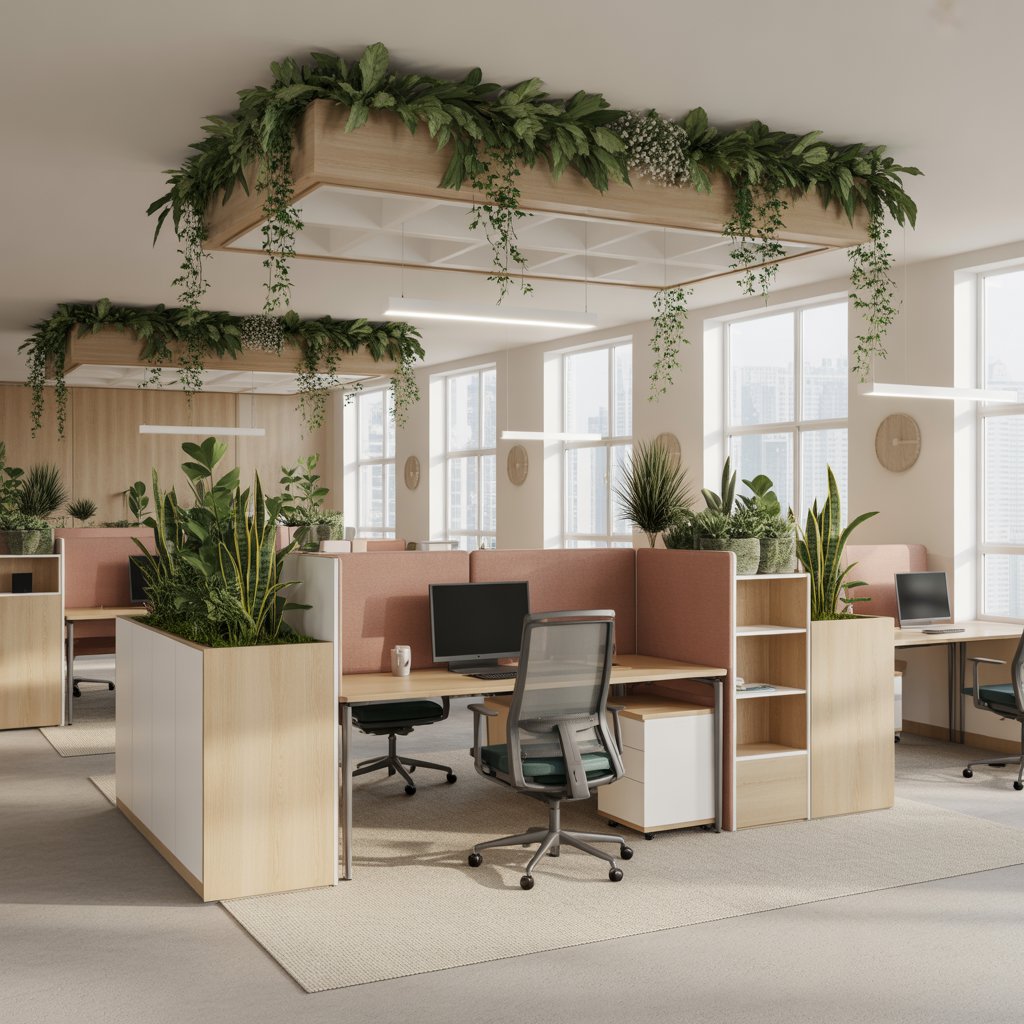
We design spaces that:
– stimulate when needed, activating energy, conversation, and creativity
– protect when necessary, offering shelter and reduced stimulation
– invite focus without constant distraction or unnecessary noise
– allow pause without guilt, understanding that recovery is part of performance
Because high performance does not happen in a constant state of alert.
It happens when the body and mind can move between action and recovery.
When the environment works with the team, leadership becomes easier.
You don’t have to push all the time.
You don’t have to correct as much.
You don’t have to compensate with motivational speeches.
The space becomes part of your leadership work.
It turns into a quiet partner—and a real competitive advantage.
I’ll leave you with this thought:
If your team is your most valuable asset,
why allow them to work in an environment that wears them down?
Why offer spaces that only “house” people,
when they could actually support and strengthen them?
Maybe the real question isn’t whether your team can perform better.
The real question is:
What would happen if the place where you lead became the environment that truly supports your team?
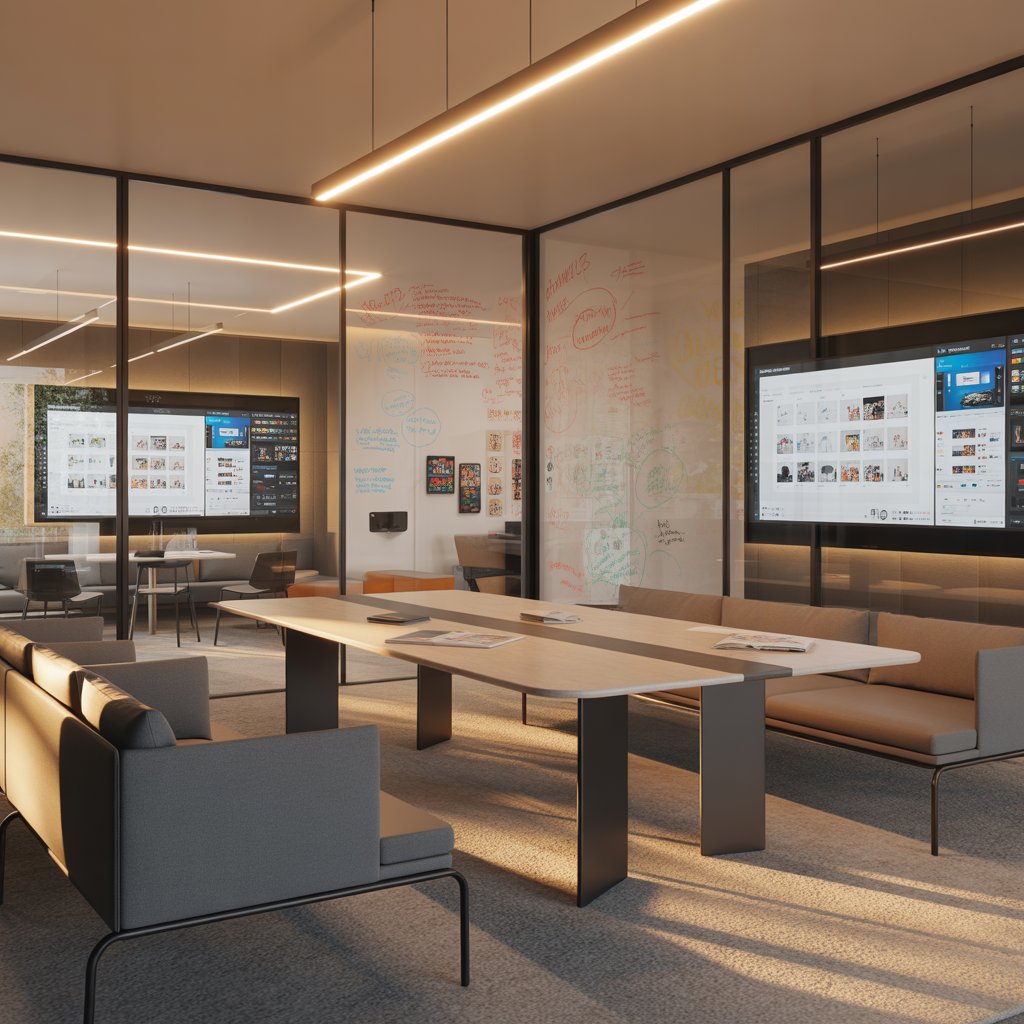
When a space invites, challenges, supports, and sustains, performance stops being a constant struggle.
That’s where companies truly grow—not just in numbers, but in clarity, consistency, execution, and yes, loyalty.
That’s the kind of environment that makes the difference.
The strategic advantage your competitors won’t see coming.
That’s the environment that turns ordinary teams into exceptional ones.
See you in the next blog.

Read the Comments +